Quick answer: California cannabis retailers must follow security rules set by the Department of Cannabis Control (DCC) in Title 4 of the California Code of Regulations. The main rules are: hire or contract BSIS licensed security personnel for the retail premises, run a video surveillance system that records 24 hours a day at a minimum of 1280 x 720 resolution and 15 frames per second, keep footage for at least 90 days, install a professionally monitored alarm system, and keep cannabis in locked, limited-access areas. Your city or county may add more rules on top.
This guide breaks the rules down for dispensary owners and managers in Los Angeles, the Inland Empire, Orange County and San Diego County. It is general guidance, not legal advice, so always check the current regulations and your local permit conditions.
Who sets cannabis security rules in California?
The Department of Cannabis Control licenses commercial cannabis businesses and sets statewide security standards. Cities and counties that allow cannabis businesses issue their own permits, and many require a written security plan, extra guards or specific camera coverage. You must meet both.
Security personnel requirements
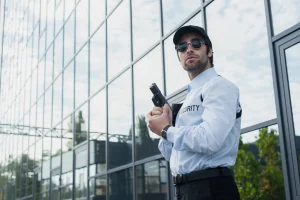
DCC rules require licensed retailers to hire or contract security personnel to provide security services at the retail premises. All security personnel must be licensed by the Bureau of Security and Investigative Services. In practice, that means:
- Every guard holds a current BSIS guard registration, and a firearm permit if armed
- The security company holds a current Private Patrol Operator (PPO) license
- Guards are on site during business hours, and many local permits also require overnight cover
You can check any guard or company in minutes using our guide to checking a security guard license in California.
What dispensary security guards do
- Check ID at the door so only adults 21 and over, or qualified medical patients 18 and over, enter
- Control entry to the sales floor and stop crowding
- Watch for theft, diversion and suspicious behavior
- Escort staff during cash and product transfers
- Secure the premises at opening and closing
- Write incident reports and keep logs that support compliance
Video surveillance requirements
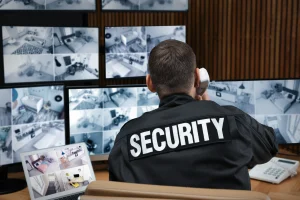
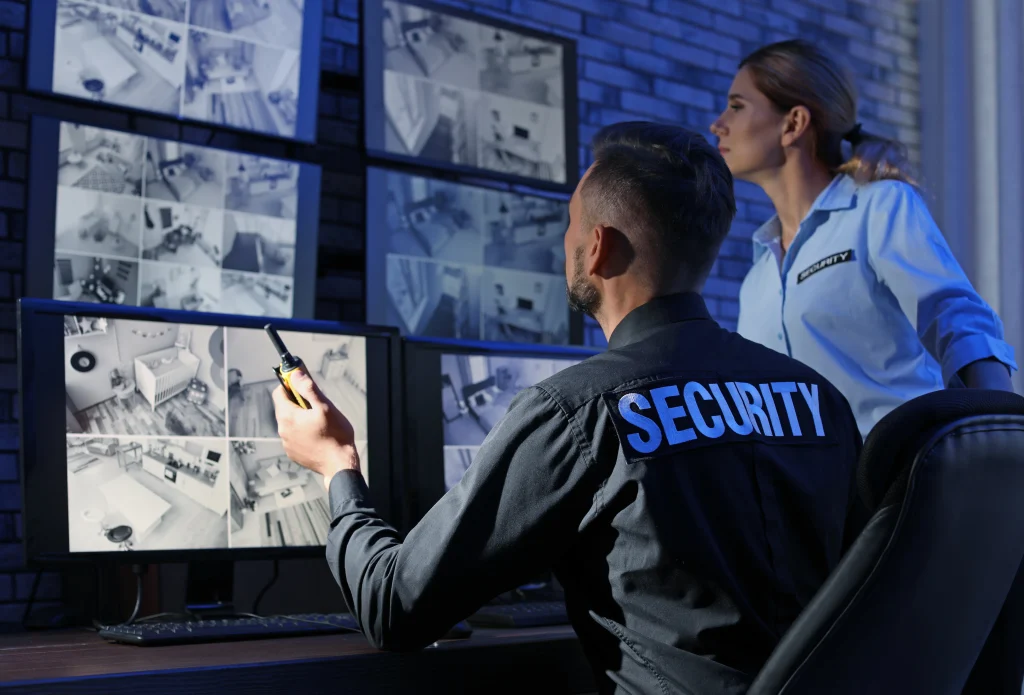
Under 4 CCR Section 15044, licensees must keep a digital video surveillance system that:
- Has a minimum camera resolution of 1280 x 720 pixels
- Records continuously, 24 hours a day, at a minimum of 15 frames per second
- Keeps recordings for at least 90 calendar days
- Covers entrances and exits inside and outside, within 20 feet of all entry and exit points
- Covers limited-access areas, security rooms, and areas where cannabis is weighed, packed, stored or loaded
- For retailers, covers point-of-sale areas, with customers’ faces clearly recorded
- Has a failure notification system and accurate date and time stamps
Footage must be available for the DCC to view and copy on request. A guard or monitoring team should check every day that every camera is recording.
Alarms, locks and limited-access areas
- Alarm system: a professionally installed and monitored alarm system from a licensed alarm company.
- Locks: commercial grade, non-residential locks on all points of entry and exit.
- Limited-access areas: cannabis storage areas restricted to authorized staff, with employee badges worn at all times.
- Storage after hours: cannabis goods kept in a locked, secure area outside of business hours.
Retail sales are also limited to set hours under DCC rules, and your local permit may be stricter.
Cash handling and transport
Because many cannabis businesses still rely on cash, cash handling is one of the highest risks. Vary the time and route of bank runs, use two person procedures, and consider armed escort for large cash transfers. Our guide to armed vs unarmed security can help you decide.
Dispensary security checklist
- Contract a licensed PPO and confirm every guard’s BSIS registration
- Write a security plan that meets DCC and local permit rules
- Test cameras daily and confirm 90 days of storage
- Test the monitored alarm and keep the alarm company’s contact details on hand
- Keep limited-access areas locked and badge controlled
- Train staff on robbery response, ID checks and incident reporting
- Review the plan after any incident and at least once a year
Cannabis security from Barzo Security Services
Barzo provides BSIS licensed unarmed and armed guards for dispensaries and cannabis businesses, along with CCTV monitoring, alarm response and overnight mobile patrol. We serve Los Angeles, Riverside, San Bernardino, Orange County and across Southern California. See our retail security guards page for more.
Call +1 951 539 7013 (24/7) or request a dispensary security quote.
Frequently asked questions
Do California dispensaries need security guards?
Yes. DCC regulations require licensed retailers to hire or contract security personnel for the retail premises, and all security personnel must be licensed by BSIS.
How long must dispensaries keep surveillance footage?
At least 90 calendar days, under 4 CCR Section 15044.
What camera resolution does the DCC require?
A minimum of 1280 x 720 pixels, recording continuously 24 hours a day at a minimum of 15 frames per second.
Do dispensary guards have to be armed?
State rules do not require armed guards. Some local permits or risk assessments call for them, especially for cash transport. Armed guards must hold a BSIS firearm permit.
Can my own employees act as security?
Security personnel must be licensed by BSIS. Using properly licensed guards from a PPO is the simplest way to meet the rule.
Do cities add their own cannabis security rules?
Often, yes. Many cities and counties require a written security plan and may add guard hours, camera locations or other conditions to your local permit.
Sources: Cal. Code Regs. tit. 4, Section 15044, Video Surveillance System; California Department of Cannabis Control; California Bureau of Security and Investigative Services.